May 12, 2025 · 9 min read · James Carrigan, NATE-Certified HVAC Technician
Why Your AC Isn't Cooling: 9 Things to Check First
Most no-cooling calls trace to one of nine causes — and several are 5-minute homeowner fixes. Here's the safe diagnostic checklist HVAC pros use.
Why Your AC Isn't Cooling: 9 Things to Check First Guide
When your air conditioner stops cooling on a 95°F afternoon, the right first move isn't always to dial a repair company. According to our service logs, roughly one in three "no cooling" emergencies traces to something a homeowner can safely diagnose — and often fix — in under five minutes. The other two thirds genuinely need a licensed HVAC technician, but knowing which bucket you're in saves you a needless $89 diagnostic visit. Below are the nine causes we see most often, ordered by how frequently they appear on our dispatch board, with the safe DIY checks and the red flags that mean it's time to stop and call a pro.
1. Tripped breaker or blown fuse
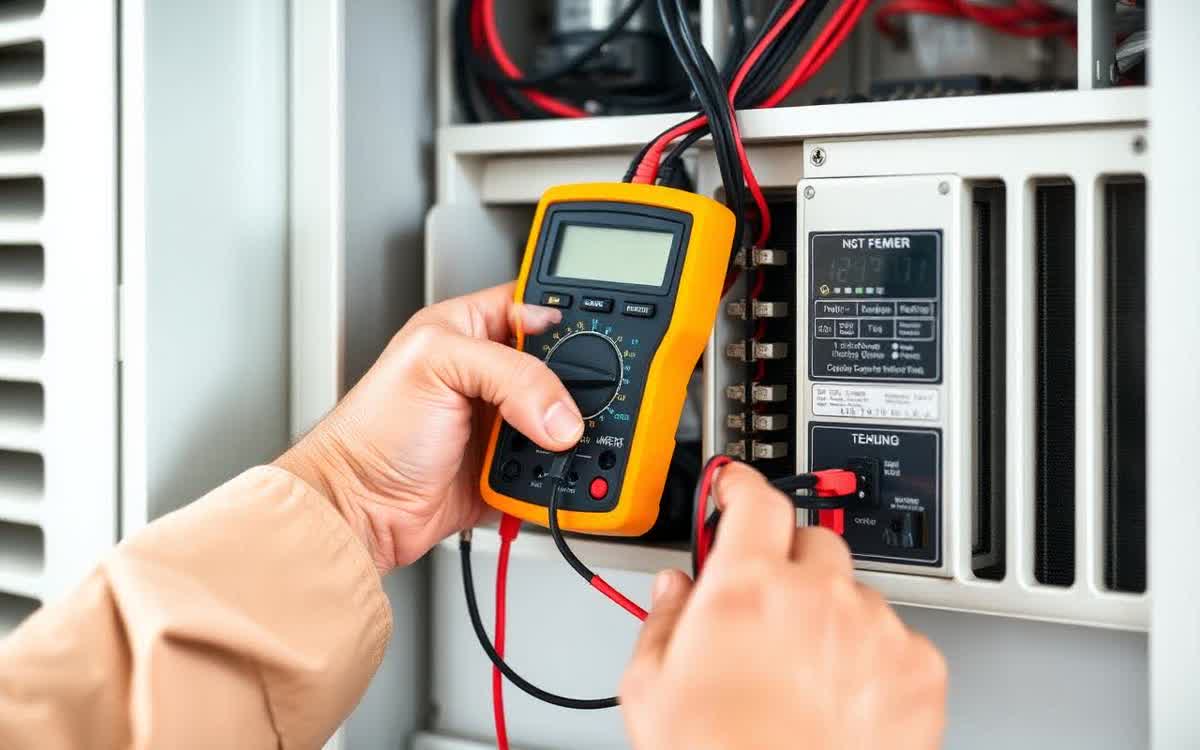
Start at your electrical panel. Look for a breaker labeled "AC," "Air Handler," or "Condenser." A tripped breaker won't be fully off — it sits in the middle position. Push it firmly to OFF, wait 10 seconds, then snap it back to ON. If the system returns to life, you're done. If the breaker trips again immediately, stop. A breaker that won't hold means you have an electrical fault — a shorted capacitor, a failing compressor winding, or damaged wiring. None of those are safe to re-test repeatedly; the next attempt can fry your control board.
2. Dirty air filter
A clogged filter is the silent killer of central air systems. As it loads up with dust, airflow across the evaporator coil drops, the coil temperature plunges below freezing, condensation freezes into solid ice, and cooling stops entirely. Pull the filter. If you can't read a newspaper through it, replace it with the same size and MERV rating. Then turn the system OFF (not just to fan) for two hours to let the ice melt before restarting. If you skip the thaw, you risk drowning the secondary drain pan and damaging your ceiling.
3. Wrong thermostat settings
It sounds insulting until it happens to you. Verify three things: mode is set to COOL (not HEAT or OFF), the fan is set to AUTO (running it on ON means the blower runs continuously even when the compressor isn't, blowing room-temperature air), and the setpoint is at least three degrees below the current room temperature. For smart thermostats, check that a schedule, Eco mode, or geofencing setting isn't holding your setpoint higher than you think.
4. Tripped condensate float switch
Modern high-efficiency systems have a small white plastic device clipped to the condensate drain line near the air handler. Its job is to shut the AC off if the drain backs up — preventing water damage. If algae or sludge clogs the drain, the float rises and kills the unit. The fix has two parts: clear the drain (pour a cup of distilled white vinegar into the cleanout T-fitting), then reset the switch. If you don't fix the drain, the float will trip again within hours.
5. Ice on the copper line or indoor coil
Walk to where the copper refrigerant lines exit your home. If you see frost or a solid ice ball on the larger insulated line, your system is iced over. Turn the thermostat fully OFF, then set the fan to ON. The fan-only mode pulls warm room air across the frozen coil and accelerates thawing. Give it at least 4 hours. Once everything is dry, restart in COOL mode. If it ices again within a day, the root cause is low refrigerant or chronically restricted airflow — both require a tech with refrigerant-handling certification.
6. Outdoor unit not running
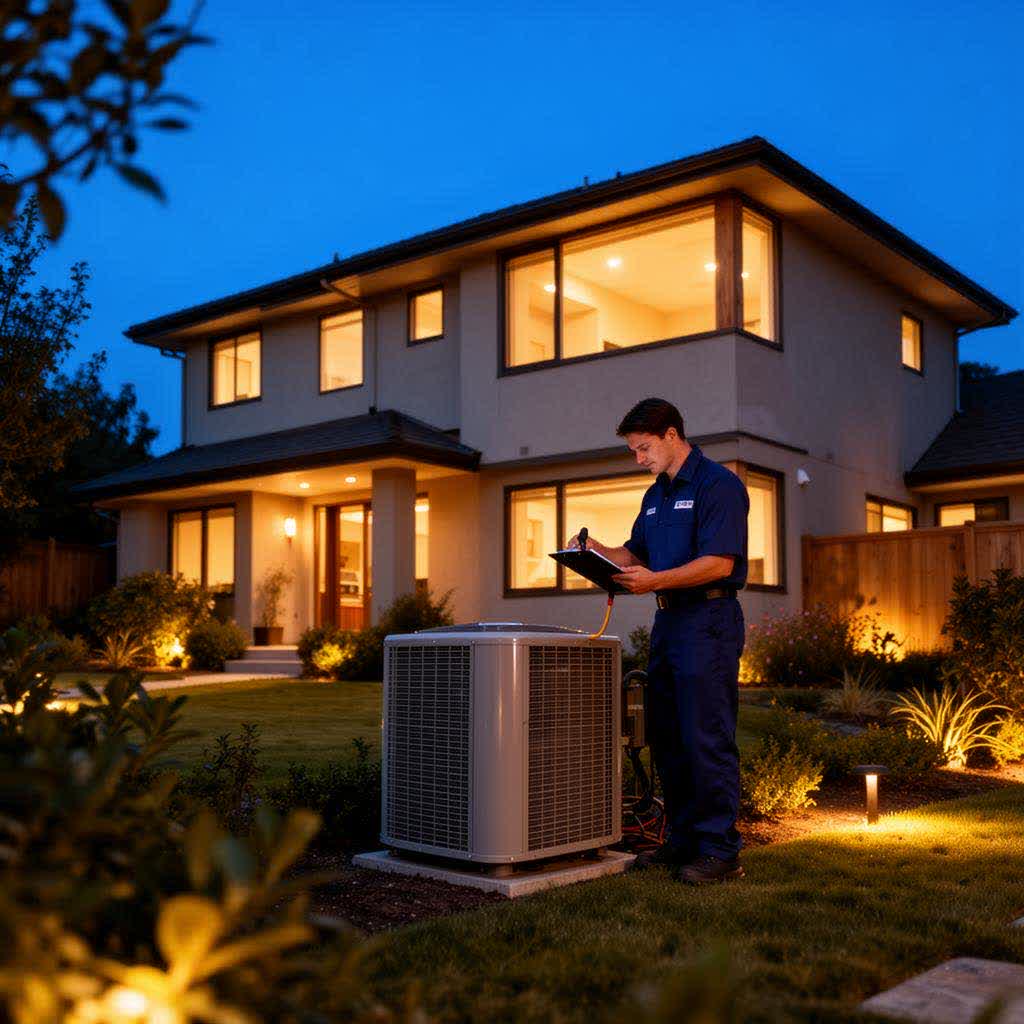
Step outside. Is the condenser (the big rectangular unit) running? If the fan on top isn't spinning while the indoor unit blows air, check the gray disconnect box mounted on the wall right next to the condenser. There's a pull-out handle inside; make sure it's fully seated. If it's in and the unit still won't start, you're likely looking at a failed start capacitor or contactor.
What capacitor failure sounds like
A failing dual-run capacitor often produces a faint hum from the unit while the fan refuses to spin. Sometimes a single push on a fan blade with a long stick (breaker off!) gets it moving — that's a textbook capacitor symptom. The part costs about $25; the repair is typically $250–$350. It's the most common HVAC failure in summer heat.
7. Dirty outdoor condenser coil
Look at the outdoor unit's fins. If they're caked with cottonwood fluff, grass clippings, pet hair, or dryer lint, the system can't reject heat to the outside air. The result: high head pressure, poor cooling, eventual compressor damage. Turn the breaker off, then gently rinse the coil from the inside out using a regular garden hose. Never use a pressure washer — it bends the aluminum fins and ruins the coil.
8. Closed registers or blocked return-air grille
Walk through every room. Open every supply register fully. Check the return-air grille (usually a large grille in a hallway or central wall) and confirm nothing — furniture, drapes, area rugs, kid's toys — is blocking it. Restricted return air is the single most common cause of frozen coils we diagnose. Closing registers in "unused rooms" feels frugal but actually starves the system, raises your bill, and shortens equipment life.
9. Refrigerant leak
Here's a fact the industry doesn't advertise enough: refrigerant doesn't get used up. A sealed system holds the same charge for its entire 15-year life. If you've "added refrigerant" before, you have a leak. Topping it off year after year is throwing money at a problem that's still there. The leak should be located with a nitrogen pressure test and electronic leak detector, then permanently repaired. R-22 leaks on older systems are often a replacement-equipment conversation, since R-22 now costs over $100 per pound.
When to stop troubleshooting and call
Some symptoms are non-negotiable — call immediately and don't keep cycling the system:
- A breaker that trips repeatedly
- Any burning smell, electrical or chemical
- Loud humming, buzzing, or grinding from the outdoor unit
- Water pooling on the floor or staining your ceiling
- Refrigerant lines that are warm where they should be cold
Comfort Pro HVAC answers (626) 618-8360 24 hours a day, every day of the year, with a real dispatcher — no voicemail. Typical emergency response is 60 to 120 minutes, and every quote is flat-rate and written down before any work begins.
Talk to an HVAC expert about Why Your AC Isn't Cooling: 9 Things to C
Live dispatcher 24/7. Same flat-rate pricing day or night.