March 21, 2025 · 10 min read · Tom Wexler, Senior Comfort Advisor
Heat Pump vs. Furnace in 2025: Which One Actually Saves You Money?
Federal tax credits and modern cold-climate inverter tech have flipped the math. Here's how to decide between a heat pump, a high-efficiency furnace, or a dual-fuel system.
Heat Pump vs. Furnace Which One Actually Saves You Money? Guide
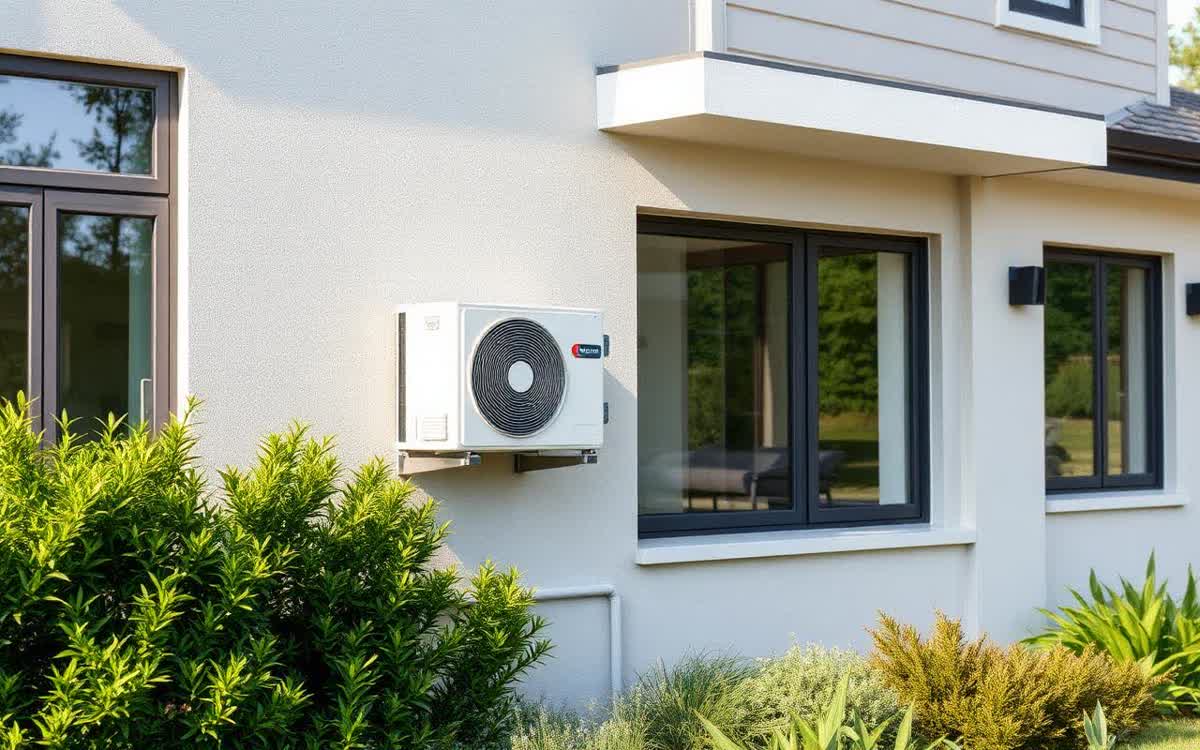
The conventional wisdom on home heating has flipped over the last three years. Modern cold-climate heat pumps now run efficiently far below the 35°F threshold people remember, the federal Inflation Reduction Act knocked roughly 30% off installed cost on qualifying units, and the gas-vs-electric price gap has tightened in most U.S. markets. For most homes in our service area, a heat pump is now the lower-total-cost choice — but not for every home. This is the math we walk through with customers every week.
What actually changed in the last three years
Three things made 2025 a fundamentally different decision than 2022.
Cold-climate inverter compressors
The Mitsubishi Hyper-Heat, Carrier Greenspeed, Trane variable-speed, and Bosch IDS Premium lines hold full rated capacity down to 5°F and continue producing usable heat to -15°F. The old line that "heat pumps don't work in winter" was true in 2005 and is simply obsolete in 2025.
Federal tax credit
Section 25C of the federal tax code now provides up to a $2,000 credit on qualifying high-efficiency heat pumps. Many states (and most utilities) layer additional rebates — sometimes $1,500 to $3,000 more. A $14,000 install can net out closer to $9,000 once all the paperwork is filed.
Grid emissions and electric pricing
The U.S. electric grid is roughly 35% cleaner than in 2018. Even when your electricity is generated by burning natural gas, modern heat pumps deliver more useful BTUs of heat per dollar than burning that same gas in your furnace.
The honest math — three numbers decide it
Forget the marketing brochures. The right answer for your house depends on three numbers and one climate fact.
- Your local electric rate in cents per kilowatt-hour. Find it on your last bill.
- Your local gas rate in dollars per therm. Also on your last bill (sometimes called "ccf" — close enough for this estimate).
- Your design temperature — the coldest hour you typically see in winter, by ZIP. A quick web search nails it.
The rough heuristic: if your electric rate is under 18¢/kWh and your gas rate is over $1.60/therm, a heat pump is the clear winner on operating cost. If electric is over 25¢/kWh and gas is under $1.20/therm (parts of New England and the Northeast), a 96% AFUE high-efficiency furnace still beats it on bills. Everywhere in between is a coin flip that depends on insulation, duct condition, and how you set the thermostat.
Dual-fuel: the best of both worlds
For homes in cold climates with high electric rates, the right answer is usually a dual-fuel hybrid. A heat pump handles the easy 60°F-to-30°F range where it's wildly efficient, and a gas furnace takes over below the "balance point" where the heat pump's economics flip negative. Modern smart thermostats (ecobee Premium, Nest 4th-gen) handle the switch automatically based on your programmed balance point — typically somewhere between 25°F and 35°F. Annual heating cost is consistently the lowest of any configuration we install.
Comfort differences your family will actually notice
Heat pumps deliver supply air at 95–105°F. Gas furnaces deliver it at 130–140°F. The temperature difference matters less than people expect, but it matters in two ways. First, supply air from a heat pump is warm but not hot — putting your hand under a register doesn't feel "blasted" the way a furnace does. Second, heat pumps run longer cycles at lower output, which feels more even than the bang-bang on/off cycling of single-stage furnaces. That long-cycle behavior is what people actually mean when they describe a system as "comfortable."
Humidity
Variable-speed equipment of any type (heat pump or furnace) removes more humidity in summer than single-stage equipment. That comfort upgrade alone is often more valuable than the heat-source choice.
Installation realities
A few practical considerations rarely covered in side-by-side comparisons:
- Heat pumps require electrical service capacity. Older homes with 100-amp panels often need a panel upgrade ($1,800–$3,000) to accommodate a whole-home heat pump and any future EV charger.
- Gas furnaces require working flue venting, which can become a problem in retrofits with corroded chimneys or sidewall vent terminations near windows.
- Ductwork sized for a furnace is often slightly undersized for a heat pump. A good installer will measure static pressure before quoting.
What we recommend
Three buckets, plain English:
- Mild climate (south, southwest, Pacific coast): heat pump alone, every time. Lowest cost, lowest emissions, longest equipment life.
- Cold winters with moderate-to-high electric rates (Midwest, Mid-Atlantic, mountain west): dual-fuel hybrid. Heat pump handles 80% of annual heating hours; furnace covers the cold snaps.
- Very cold winters with very high electric rates and cheap gas (parts of New England and Upper Midwest): a 96% AFUE modulating furnace paired with a high-SEER2 AC. The math still favors gas here, even after credits.
How to get the numbers run for your house
A real recommendation requires more than a heuristic. Square footage, insulation level, window count, duct condition, and your actual utility rates from the last 12 months are what drive an honest Manual J load calculation. We do this free in-home for any customer considering a system replacement.
Want the math run for your specific home and utility rates? Call (626) 618-8360 for a free in-home estimate. We'll bring you side-by-side numbers — install cost, projected annual operating cost, available rebates and credits, and projected 10-year total cost of ownership — and let you decide with the full picture.
Talk to an HVAC expert about Heat Pump vs. Furnace in 2025: Which One
Live dispatcher 24/7. Same flat-rate pricing day or night.